
Treatments for you
Vision enhancement
At Manchester Royal Eye Hospital, we provide consultant-led vision enhancement tailored to your needs.
Whether you’re considering laser treatment or other advanced options, our team of specialists guide you to the most effective solution for your unique journey.

Your consultant led assessment - the first step in your treatment journey
We will spend around 2 hours with you carrying out an in-depth assessment. It includes a series of tests to determine your suitability for vision enhancement and to help identify the most appropriate treatment for your needs and expectations.
The assessment is carried out by a highly experienced team led by a Consultant Ophthalmic Surgeon specialising in corneal and refractive Surgery, supported by an optometrist and our corneal nurse.
During your assessment, your consultant will review your results, explain the recommended procedure, and discuss the potential risks and benefits. You’ll also have the opportunity to ask any questions.
At Manchester Royal Eye Hospital, we’re committed to finding the vision enhancement treatment that’s right for you. If laser vision enhancement isn’t the right fit, we’ll explore a range of tailored treatment options to suit your individual needs. Occasionally, we may identify other eye conditions that require further care, and in such cases, we’ll ensure a smooth referral to NHS services via your GP. More information on eye health, treatments and conditions can be found here.
The package price is £2,500 per eye. Just pay £95 to get your consultation booked.
Discover Clearer Vision
Consultant-led Eye Care
Laser Vision Correction
One of the most well defined and safest medical procedures in the world.
With over 30 million procedures undertaken worldwide, the safety profile of laser refractive surgery is well-established. The aim of laser eye surgery is to reshape the cornea (the window to the eye) to reduce the dependence upon glasses or contact lenses
Two main forms of laser surgery exist. Surgery that involves a flap created on the surface of the eye in the form of LASIK, and treatments that do not have a flap that affect the surface of the eye directly (LASEK).
Other procedures can be used where lenticules can be removed from the eye. These procedures are undertaken within the Private Patient Centre at Manchester Royal Eye Hospital, using the latest femtosecond and Excimer laser technology.
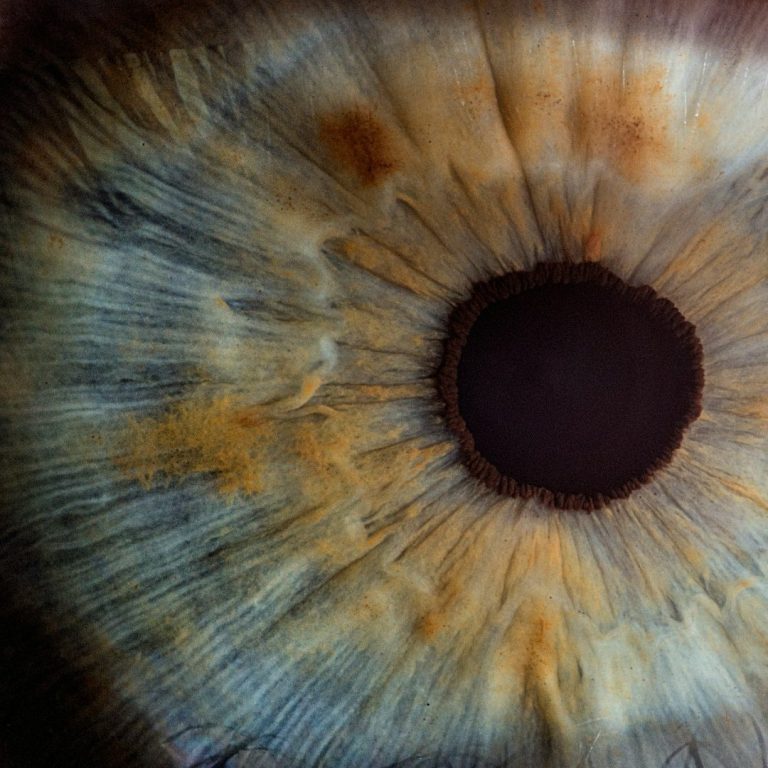
LASIK
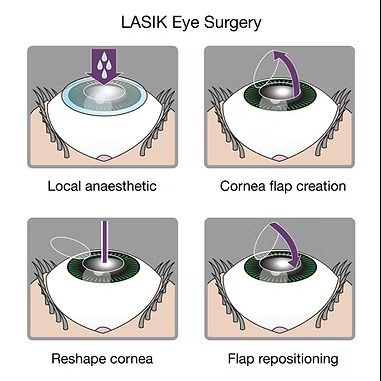
A thin flap is created using bladeless, femto second laser technology on the surface of the eye. This provides a highly accurate and safe approach to creating a flap, and also gives the option to further customise detailed treatment for patients. The flap acts as a natural bandage, aiding rapid visual recovery and reducing pain after the procedure.
During the procedure, the flap is gently lifted to allow the Excimer laser treatment to be applied underneath the flap. It is then carefully repositioned meaning healing can start immediately. No stitches are required to hold the flap in position, only the natural healing of the eye.
LASEK
LASEK surgery utilises excimer laser technology to apply laser directly to the surface of the eye, and no flap is created. This is usually undertaken in specific situations where your eye is not deemed suitable for flap based surgery. This type of surgery is safe and effective, with visual outcomes being comparable to flap based (LASIK) surgery.
As the laser is applied directly to the surface of the eye, it can create more short term post-operative discomfort than LASIK surgery, and the healing process can be slower, meaning the visual recovery takes a bit longer than flap based surgery.
Refractive Lens Surgery
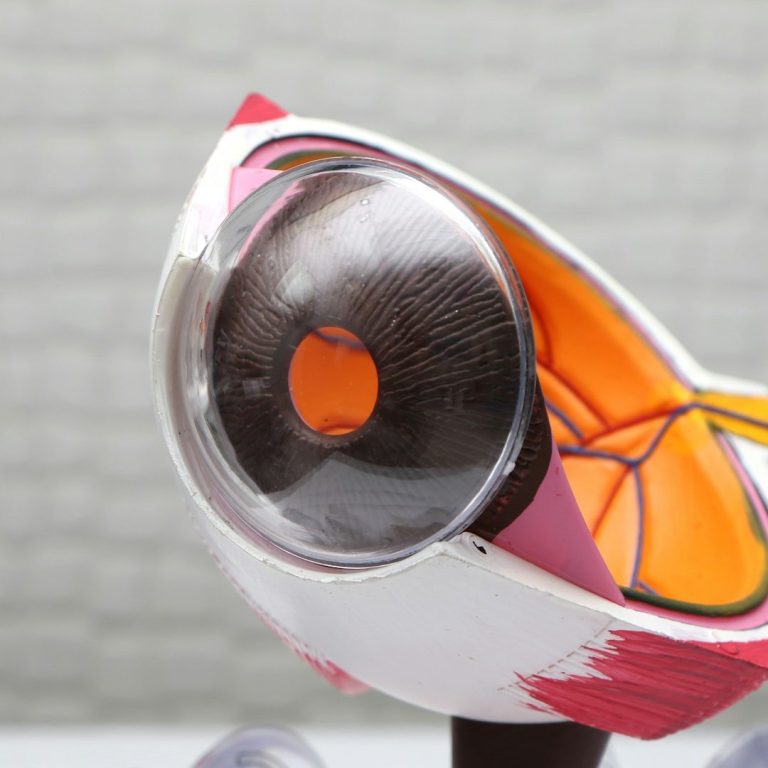
Refractive lens surgery is suitable for patients aged 50 or over, though younger patients can be considered in some cases, especially with a glasses prescription higher than the normal range for laser eye surgery. Lens clarity and flexibility diminish with age, and many older patients have the beginnings of a cataract, making lens replacement the best option, even for those with lower prescriptions, particularly if they are long-sighted.
Other candidates include those with astigmatism and stable glaucoma. Your surgeon will scan and test your eyes during your consultation to assess suitability, including the use of toric intraocular lenses to improve vision in patients with astigmatism (often caused by an uneven, rugby ball-shaped cornea). We also offer premium lens treatments such as multifocal and extended depth of focus lenses, tailored to individual needs and discussed in detail at your appointment. Not all patients are suitable for every lens type, so thorough consultation and testing are essential.
Implantable Contact / Collamer Lens
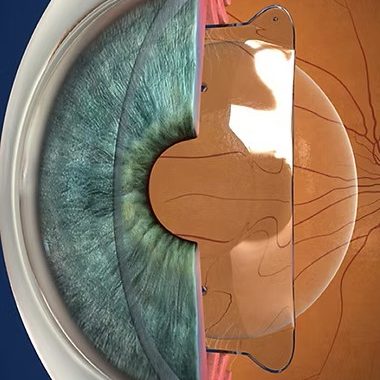
Implantable lenses are often used for patients that are not suitable for laser refractive surgery, providing an excellent option to reduce dependence on glasses.
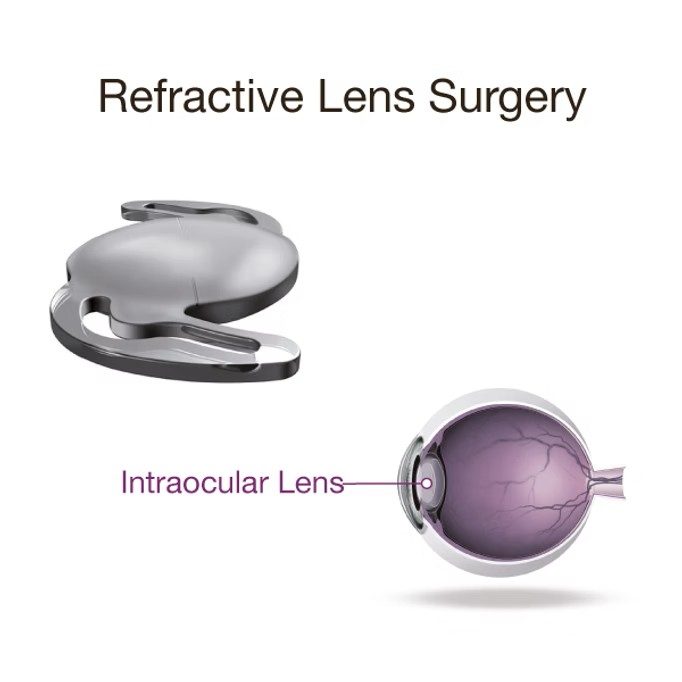
The EVO Visian ICL (Implantable Collamer® Lens) manufactured by STAAR Surgical and the IPCL are lenses that are implanted through a keyhole incision in the eye behind the iris and in front of the natural lens. The lens contains collagen which naturally occurs in your body. It is called a phakic implant because your eye still has its natural lens retained.
During your assessment, you will have the following tests:
- Corneal Topography (measurement of shape and corneal thickness measurements)
- Wavefront analysis (this will analyse the optical quality of your eyes and the information will be used to guide treatment)
- Full vision testing by an Optometrist
- Counselling from the Corneal Nurse / Consultant
- Tear test for dry eyes
- A full bio-microscopic examination of the front of your eyes with your consultant
- Examination inside the eyes, including the retina with your consultant